The Handoff: Robert Henry Jr.’s Legacy and Wayshawn Parker’s Arrival

By Frankie “The Horn” Calderón — 94.3 The Bird
Every great season leaves behind a ghost.
For UTSA, that ghost wears No. 27.
Robert Henry Jr. walking out of the Alamodome for the final time was not just a roster change. It was not just a senior finishing his eligibility, clearing out his locker, and leaving behind an empty chair in the running back room.
It was the final page of the first chapter of the Stonewall Merritt era.
And what a chapter it was.
Season 1 of Rise of the Roadrunners was built on certainty. UTSA knew who it was. The Roadrunners knew how they wanted to win. They knew how they wanted opponents to feel by the fourth quarter. They knew what kind of football they wanted the country to associate with San Antonio.
Physical. Relentless. Uncomfortable.
And whenever UTSA needed to remind everyone what that meant, the answer was usually the same.
Give the ball to Robert Henry Jr.
When the offense needed calm, Henry brought it.
When the Alamodome needed juice, Henry delivered it.
When Stonewall Merritt needed to show the country that this program was no longer asking for respect, Henry became the statement.
Now he is gone.
And that leaves the first true question of UTSA’s Season 2:
Can the Roadrunner machine keep moving after losing its heartbeat?
Robert Henry Jr. Was More Than RB1
Do not make the mistake of shrinking Robert Henry Jr. into a stat line.
That is what people do when a foundational player leaves. They pull up the rushing yards. They count the touchdowns. They look at the box score and convince themselves production is the same thing as presence.
It is not.
Henry was more than RB1 for UTSA football. He was the tone-setter. The closer. The bruiser. The emotional engine of the Roadrunners offense.
Owen McCown may have been the one holding the keys, but Henry was the heat under the hood. He was the player who turned clean drives into punishing drives. He made linebackers hesitate. He made safeties creep forward. He made defensive fronts start looking at the clock before the game was anywhere close to over.
That was the weight of No. 27.
He was physical enough to punish tired defenses. Reliable enough to protect leads. Explosive enough to turn routine handoffs into moments that made the Dome shake.
In blowouts, Henry was the stamp.
In tighter moments, like the Colorado State scare, he was the stabilizer.
He was the player fans trusted when a game needed to be put away. He represented the “no panic, no softness, no excuses” version of UTSA football that Stonewall Merritt built his name on.
That is why replacing him is not simple.
Because UTSA is not just replacing carries.
The Roadrunners are replacing trust.
The Standard Has to Survive the Star
This is where Season 2 of Rise of the Roadrunners gets interesting.
Season 1 was the rise. It was the shockwave. It was UTSA kicking the door open and forcing the country to look toward San Antonio. The Roadrunners spent last season proving they belonged on the stage.
That part is over.
Now comes the harder part.
Proving the program can survive after one of its first legends walks out the door.
That is the difference between a great season and a real era. Great seasons have stars. Real eras have standards. Great seasons can be remembered. Standards can be repeated.
And that is the challenge sitting in front of Merritt’s program.
Losing Henry is not just about losing yards or touchdowns. It is about losing body language. It is about losing the guy on the sideline everyone believed in when the game got uncomfortable. It is about losing the back who could take a normal second-and-six and turn it into a message.
A good program can replace production.
A real program has to replace presence.
That is the Season 2 test.
Because comfort is dangerous. It is hard to hunt at 4 a.m. when you are sleeping in satin sheets. After the dominance of Season 1, UTSA cannot afford to assume the machine will run the same just because it did before.
The jersey changes. The role does not.
The expectation stays.
And that is where Wayshawn Parker enters the story.
Enter Wayshawn Parker
New name.
New number.
New pressure.
Wayshawn Parker arrives in San Antonio as a transfer running back from Washington State, and he is stepping into the most emotionally important vacancy on the UTSA roster.
That matters.
He is not walking into an empty room. He is walking into a room where the walls still smell like collision. He is walking into a position that already has a standard attached to it. He is walking into a role that Roadrunner fans understand because they just watched Robert Henry Jr. turn it into something sacred.
That is a heavy thing to inherit.
And no, it is not fair to ask Parker to replace a legend.
But that is what he signed up for.
This is college football. This is the transfer portal age. This is what happens when a player walks into a winning program with a vacancy at a position that helped define the entire identity of the offense.
The comparisons are inevitable.
Every missed cut will bring Henry’s name back into the conversation. Every short-yardage stop will make the Dome remember No. 27. Every quiet half will give somebody a reason to ask whether the Roadrunners lost more than they realized.
But inside that locker room, Parker will not be judged by nostalgia.
He will be judged by work.
At UTSA, reputation gets you in the door.
Contact earns you carries.
Consistency earns you trust.
Stonewall Merritt is not handing anybody a legacy because they showed up with a transfer tag next to their name. Parker may have arrived with opportunity, but opportunity and ownership are not the same thing.
The role will not be given to him.
It has to be earned.
Parker Does Not Have to Be Henry
Here is the part everybody needs to understand.
Wayshawn Parker does not need to become Robert Henry Jr.
That would be the wrong mission.
He does not need to copy the heartbeat. He needs to keep the blood moving.
Henry was the hammer. Parker has a chance to become the blade.
That is not disrespect. That is evolution.
Parker brings fresh legs into an already dangerous UTSA offense. He brings a chance to give the Roadrunners a different rhythm in the run game. Speed. Burst. Change of pace. A new kind of stress for defenses already trying to deal with Owen McCown, an experienced offensive structure, and receivers who can stretch the field.
That is what makes this transition fascinating.
Parker does not have to carry the entire offense by himself. He is not being dropped into a broken machine and asked to rebuild it. The offensive line already knows the expectation. McCown already commands the huddle. The receiving corps can punish defenses that cheat too far toward the box.
That means Parker’s job is not to save UTSA.
His job is to punish defenses for worrying about everyone else.
That is the opportunity.
If he can bring his own rhythm to the Roadrunners’ run game, this offense does not have to become a lesser version of last year. It can become something different. Maybe even something more dangerous.
But that only happens if Parker earns belief.
Not hype.
Belief.
There is a difference.
Stonewall Merritt’s View: The Standard Did Not Graduate
You already know how Stonewall Merritt sees this.
He is not standing in front of that locker room talking about replacing Robert Henry Jr.
He is talking about protecting the standard.
Henry graduated.
The expectation did not.
UTSA does not retire toughness when a senior leaves. The Roadrunners do not pack away physicality with last year’s shoulder pads. They do not treat graduation like permission to become softer, slower, or less demanding.
That is not the Stonewall way.
The program has reached the point where it has to become bigger than the names that built the first monument. That is how a team grows from a great story into a real dynasty. That is how a perfect season becomes more than a memory.
The first stars show everyone what is possible.
The next wave proves it was not an accident.
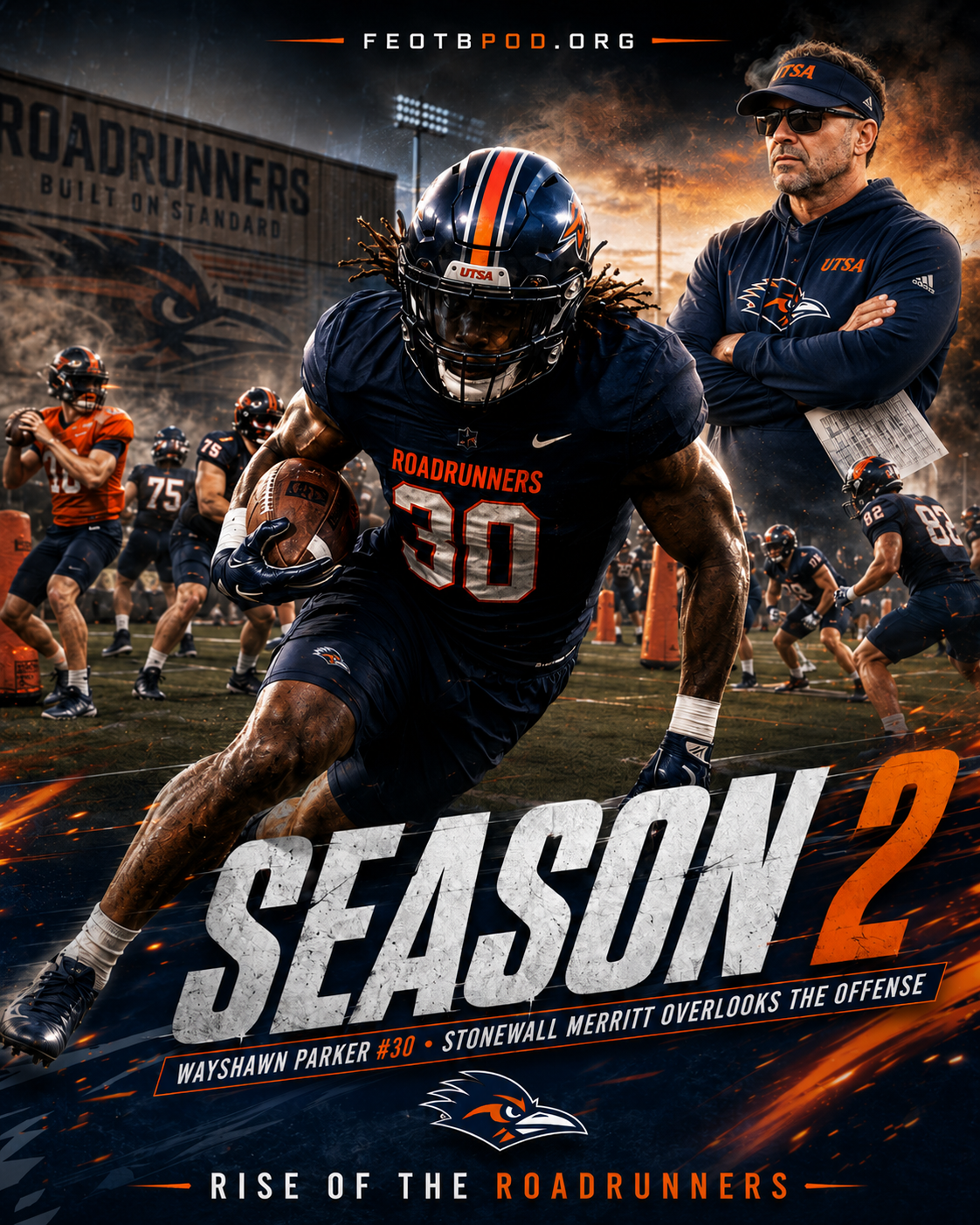
That is the responsibility Parker is walking into.
He is not just competing for touches. He is being asked to protect the identity of a position that helped define the rise of UTSA football.
That is why this storyline matters.
Because this is not just about one running back.
This is about whether the Roadrunners can keep their edge after losing one of the players who sharpened it.
This Is Not a Rebuild. This Is a Handoff.
The word around San Antonio should not be panic.
It should be proof.
UTSA is not rebuilding its identity. The Roadrunners are testing it. The ball is being handed from one chapter to the next, and now everybody gets to see whether the standard survives contact with change.
Robert Henry Jr. carried the torch through Season 1.
Wayshawn Parker does not need to be the same flame.
He just better not let it go out.
Because in this program, carries are not gifted.
They are survived.
In San Antonio, the Dome remembers. The locker room remembers. The standard remembers.
No. 27 is gone, but the echo is still there.
Robert Henry Jr. gave UTSA its heartbeat. Wayshawn Parker does not have to copy the rhythm. He just has to make sure the pulse is still there.

The first chapter ended with Henry walking out as a legend.
The second begins with Parker walking in under the weight of everything Henry helped build.
The handoff has been made.
Now Parker has to run through the smoke.
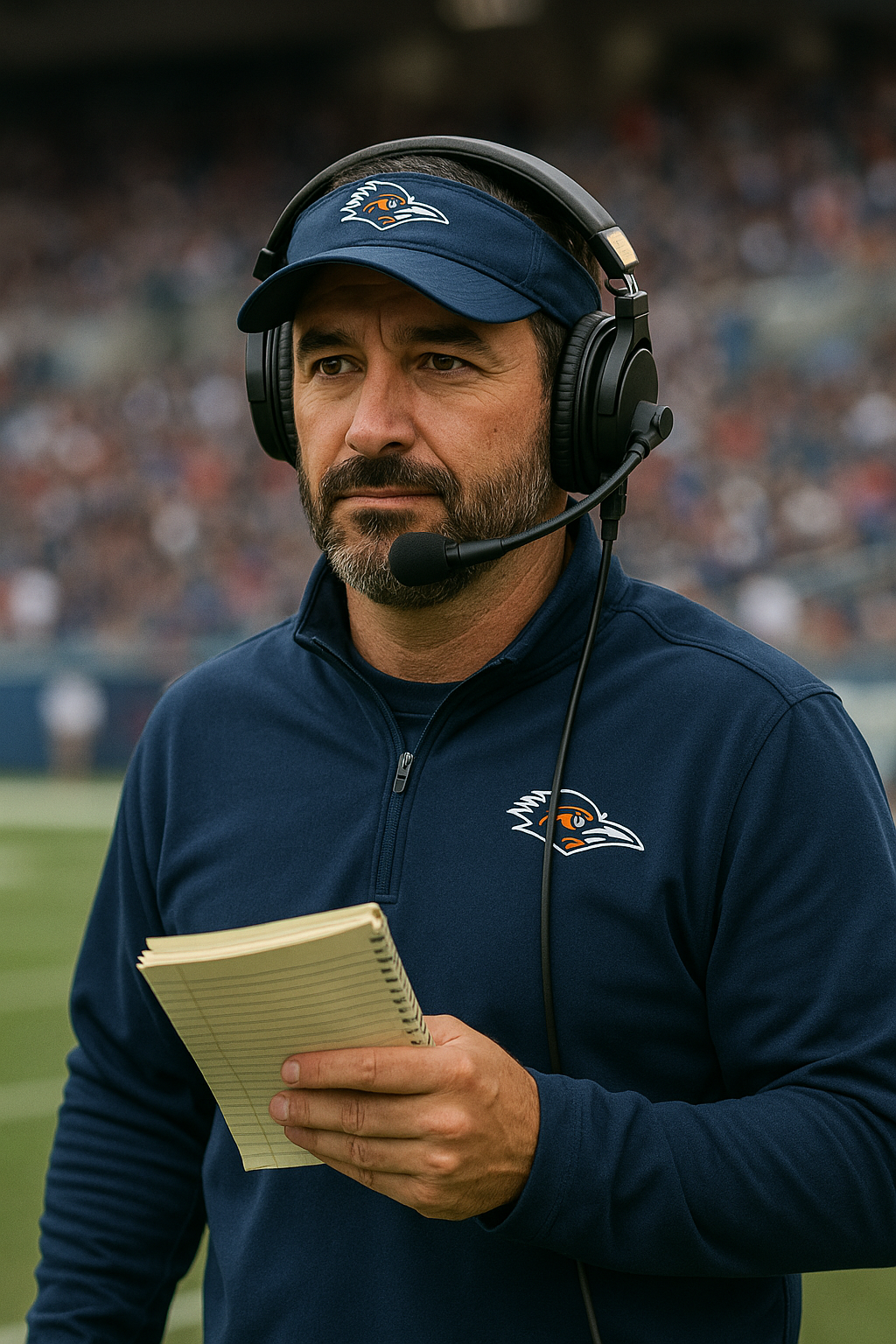
Frankie Calderón, better known across Texas airwaves as “The Horn,” is a no-nonsense football lifer with a sharp tongue and a soft spot for the underdog. Raised just outside of Pueblo, Colorado, Frankie cut his teeth covering JUCO ball and D2 programs before turning heads with his bold coverage of the Western Colorado Mustangs — and one fiery young coach named Clay Merritt.
When Merritt made the leap to UTSA, Frankie followed — not as a coach, but as the unofficial voice of the program, launching Runner Nation Radio and embedding himself in the culture of the team.
Fans love him. Opposing coaches fear him. And Stonewall? He respects the hell out of him.

College Football Carnage, Bo Nix Under Fire & NBA Tip-Off | FeOTB Ep 294